
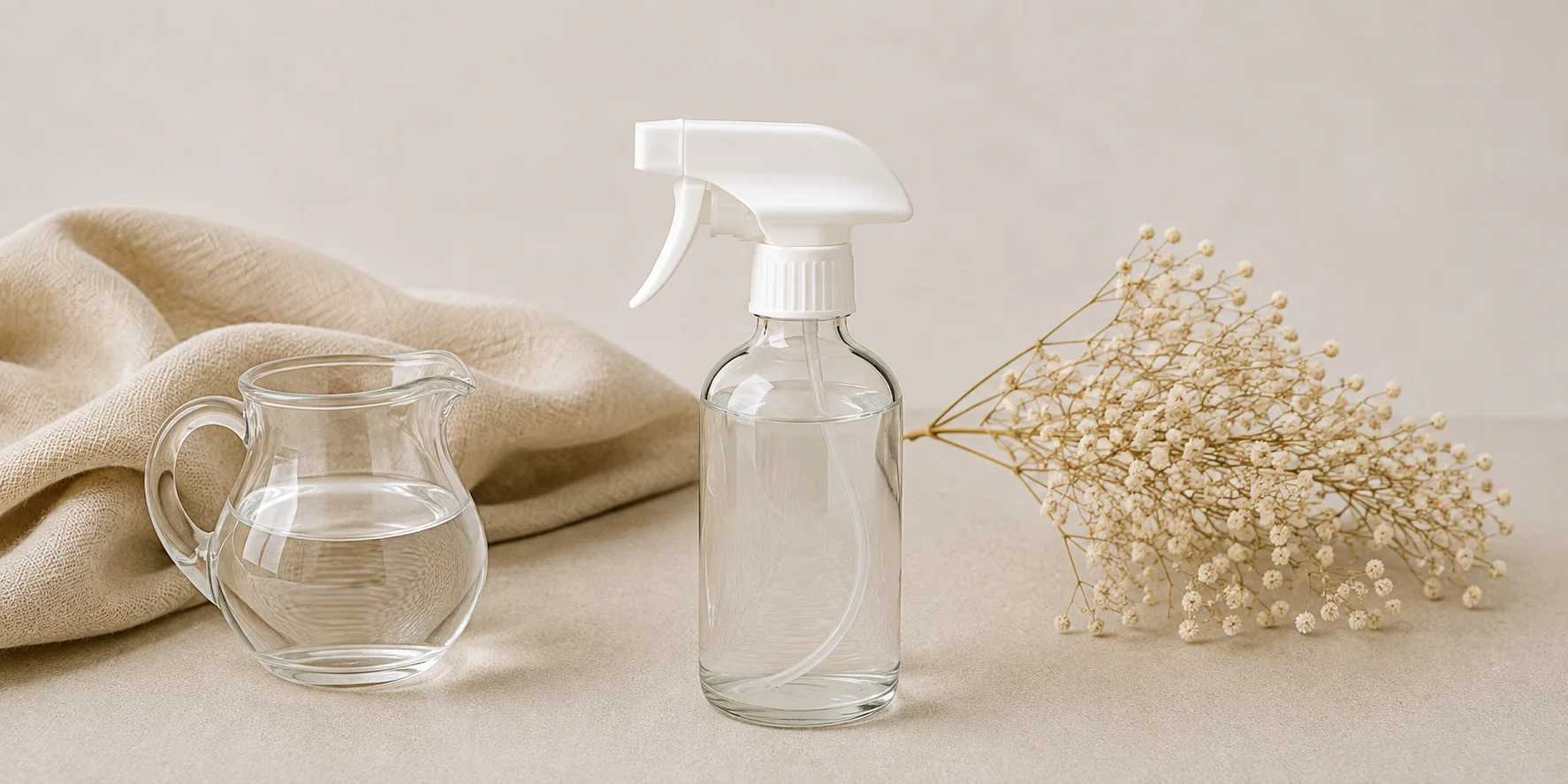
There is nothing quite like walking into a room that greets you with a gentle, personalized scent. Making your own room sprays gives you full control over the ingredients, strength, and fragrance profiles. In this post, we’ll walk you through a simple, step-by-step guide to crafting a premium room spray that smells incredible and lasts.
The Golden Ratio for Room Sprays
For a high-performing room spray, the general industry standard is a ratio of 5% to 20% Fragrance Oil mixed with 80% to 95% Room Spray Base.
Your exact fragrance percentage will depend on the oil’s potency, the maximum limits of your base, and how strong you want the final spray to be. Always check the IFRA (International Fragrance Association) certificate for your specific fragrance oil to ensure you are staying within the safe maximum usage limits for room sprays and air fresheners.
Example Formula (For our standard 8 oz spray bottle):
Fragrance Oil: 1.2 oz
Room Spray Base: 6.8 oz
Materials & Tools You’ll Need:
-
Room Spray Base: A pre-blended, cosmetic-grade base designed to easily bind with fragrance oils.
-
Fragrance Oil: Premium, cosmetic-grade scent oil.
-
Spray Bottle: Our glass bottles with a fine-mist atomizer.
-
Additional Items: Small measuring cup/pitcher or a digital scale, and a pipette (dropper) for precision.
Step-by-Step Instructions
1. Measure the Base
Using your measuring cup or digital scale, measure out 6.8 oz of your room spray base. Carefully pour it into your spray bottle, using a funnel or pipette if necessary to prevent spills.
2. Add the Fragrance
Measure out 1.2 oz of your chosen fragrance oil and add it directly to the base inside the spray bottle.
3. Secure the Components
Screw the spray top firmly onto your bottle. If the plastic dip tube is too long for your bottle, simply trim the bottom at a slight angle so it sits perfectly just above the bottom of the jar.
4. Shake and Mist
Give the bottle a good shake to completely blend the fragrance oil with the base. Your custom room spray is ready to enjoy!
Testing Your Batches
When launching a new scent or formula, it is critical to run small test batches before pouring a large inventory. Keep an eye out for these key factors:
-
Separation or Cloudiness: Pushing a fragrance oil past its maximum solubility limit can cause the mixture to look cloudy or separate into layers over time. If this happens, you may need to lower your fragrance percentage or use a solubilizer.
-
Scent Throw: Because a good room spray base atomizes so efficiently, some potent fragrance oils might smell incredibly strong at just a 5% or 10% load.
-
Sprayability: Ensure your specific combination of base, fragrance, and bottle pump creates a beautiful, fine mist rather than a heavy, wet stream.
FAQ
Why should I make my own room spray?
-
Transparency: You know exactly what is going into your home products—no mystery additives.
-
Customization: You can curate a signature scent line that perfectly aligns with specific seasons, moods, or branding aesthetics.
-
Profitability & Sustainability: Buying your ingredients in bulk and utilizing reusable or recyclable spray bottles is highly economical for small businesses.
-
Amazing Gifting: Custom room sprays make thoughtful, premium, and upscale gifts.
How long does a homemade room spray last on the shelf?
Typically 2 to 6 months, depending on the specific fragrance oils used and how the bottles are stored. For the best shelf life, keep your inventory stored in a cool, dark place out of direct sunlight.
Why is my room spray turning cloudy or separating?
This usually means the fragrance oil you used isn’t fully binding with the base, or your fragrance oil percentage is too high. Try reducing your fragrance oil load down to 10% or 5% to see if the mixture clears up, or verify if your base requires a separate emulsifier for certain oils.
Can I spray this formula on fabrics, curtains, and linens?
While a high-quality base should evaporate cleanly, always test your spray on an inconspicuous spot of the fabric first. Certain heavy fragrance oils or natural dyes can occasionally leave a residue on delicate materials like silk or white linen.
Is it safe to use around pets and children?
Always practice caution. Certain synthetic fragrance oils and natural essential oils can be toxic to pets or individuals with respiratory sensitivities. Research your ingredients thoroughly and always use room sprays in well-ventilated areas.
Can I sell homemade room sprays in the US?
Yes, but you need to follow standard US home fragrance guidelines. This includes ensuring your fragrance load complies with IFRA standards for Category 10A (Aerosols/Room Sprays), including proper safety warning labels on your packaging, and maintaining your product Safety Data Sheets (SDS).

